Slate Electric Truck Lacks Four-Wheel Drive, Sparking Concerns Among Enthusiasts
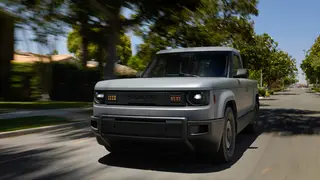
The new Slate EV truck, praised for its low price and customizable design, currently only offers rear-wheel drive, leaving out all-wheel drive options that many off-road and winter drivers expect. While the company has hinted at future AWD models, no official confirmation has been made yet. This absence could deter buyers in snowy or rugged terrain who rely on enhanced traction.
The Slate Electric Truck, unveiled by the Michigan-based startup Slate, launched in October 2026 with a base price of $24,950 and a focus on affordability, customization, and everyday utility. Despite its 181 horsepower, 195 ft-lb of torque, and 2,000-pound towing capacity—comparable to the hybrid Ford Maverick—it currently offers only rear-wheel drive, omitting all-wheel drive (AWD) options that many off-road enthusiasts and winter drivers expect. This absence has sparked concern among potential buyers in snowy or rugged regions, especially since the company has not confirmed AWD availability despite an email from a fan forum suggesting it is "in the plans for a future version." No official statement from Slate has verified this, leaving the feature’s development status uncertain. The truck is expected to begin shipping from its Warsaw, Indiana, factory as early as July 2027, with pre-orders open and a $300 deposit required to secure a spot.
Slate’s decision reflects a strategic trade-off: prioritizing low cost and range efficiency over traction in challenging conditions. The company explicitly markets the vehicle as "built for everyday practicality," not heavy-duty off-roading or extreme hauling. By avoiding AWD, Slate reduces manufacturing costs, maintenance complexity, and energy drain—factors that could further diminish its already modest 205-mile range. This aligns with earlier reports highlighting EVs’ thermal management challenges during sustained towing, which the c
The absence of all-wheel drive in the Slate Electric Truck could influence buyer behavior in colder and more rugged regions, where traction is a safety and practical necessity. This may limit its appeal among rural workers, outdoor enthusiasts, and winter commuters—key demographics for pickup trucks—potentially affecting market penetration in those areas. The broader EV industry has seen similar trade-offs, such as Tesla’s early decision to omit AWD on base models of the Model 3, which later evolved into a more balanced offering. However, unlike Tesla, Slate is positioning itself as a minimalist, low-cost alternative, meaning its success may hinge on convincing buyers that rear-wheel drive suffices for daily use. If Slate fails to address traction concerns, it could face reputational risks or slow adoption in regions where 4x4 capability is expected. The situation also highlights a growing tension in the EV market: balancing affordability with functionality. What’s next could include t