Mass Effect Fans Rapidly Fund Billboards to Protest BioWare Closure and Demand Accountability
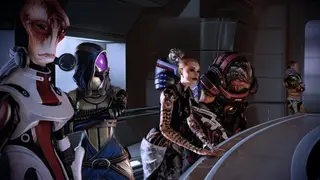
Within 15 minutes of launching a GoFundMe, fans of Mass Effect raised over $5,000 to place billboards near EA’s headquarters, the shuttered Edmonton office, and the upcoming Game Awards. The campaign, led by members of the 'We Are Mass Effect' subgroup, aims to amplify public pressure on Electronic Arts following BioWare's closure. Proceeds beyond the goal are intended for donation to the Game Workers’ Hardship Fund.
Within 15 minutes of launching a GoFundMe on October 26, 2026, members of the “We Are Mass Effect” subgroup—Kala Elizabeth, Ariel Aguilar, and Mer—raised over $5,274 to fund billboards near Electronic Arts’ Redwood City headquarters, BioWare’s shuttered Edmonton office, and the December 10 Game Awards in Los Angeles. The campaign followed a prior effort that secured a Times Square billboard and a Change.org petition surpassing 250,000 signatures, which has sparked debate over whether “saving” Mass Effect should involve reassigning the franchise to a new studio without regard for displaced BioWare staff. The group’s immediate goal was to amplify public pressure on EA through high-visibility displays in locations where the company is most visible. Proceeds beyond the $5,274 target were intended for the Game Workers’ Hardship Fund, organized by United Videogame Workers-CWA (UVW-CWA), though the fund currently lacks a direct donation mechanism and is exploring future options via Action Network. The trio has reached out to UVW-CWA but has not yet received confirmation on accepting donations.
The broader context includes BioWare’s troubled development history and its abrupt closure, which left hundreds of employees without jobs despite strong fan loyalty and early signs of creative momentum for Mass Effect 5. The campaign reflects a growing trend in the game industry where players increasingly mobilize to demand accountability from publishers, especially after studio closures. Whi
This campaign could signal a broader shift in how gaming communities wield collective power, moving from digital advocacy to physical protest with measurable impact. By leveraging crowdfunding for real-world visibility, fans are demonstrating that consumer sentiment can disrupt corporate narratives—especially when tied to labor outcomes. The effort may inspire similar actions around other canceled franchises or studio closures, particularly if unions like UVW-CWA gain greater public recognition and infrastructure. A comparable precedent is the 2013 “Save the Game” movement for *The Last of Us*, though that focused more on narrative continuity than worker support. What’s distinct here is the explicit linkage between fan activism and labor solidarity, which could influence how publishers view community engagement in future decisions. The next phase to watch is whether EA responds publicly or if other studios see increased scrutiny over workforce treatment—especially as unionization effor