Testing a $75,000 Porsche racing simulator made my home setup feel outdated
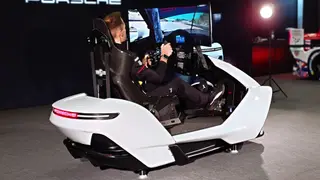
The author tried a high-end Porsche race simulator at an event and was stunned by its realism and immersion. The experience highlighted the gap between consumer-grade setups and professional simulators. Even though it’s not accessible to most, it underscores how far sim racing technology has advanced.
At a recent motorsport technology event, the author experienced a Porsche racing simulator priced at $75,000, an elite setup designed for professional drivers and engineering development. The simulator’s realism—evident in its precise force feedback, high-fidelity visual rendering, and motion platform—immediately made the author’s home sim racing rig feel rudimentary by comparison. Though no specific event name or location is mentioned, the experience underscores a growing divide between consumer-grade hardware and professional-grade simulation systems. This gap reflects years of incremental innovation in haptic technology, real-time physics modeling, and immersive display systems, driven largely by automotive manufacturers investing in driver training and vehicle development tools.
The simulator’s existence points to broader industry trends: automakers like Porsche are increasingly leveraging advanced simulators not just for product testing but also for driver engagement and brand experience. These systems represent a convergence of high-end gaming hardware, real-world vehicle dynamics, and data-driven feedback loops—capabilities far beyond what most home users can access. While the author’s personal setup is implied to be typical of enthusiast-level gear, the contrast highlights how rapidly sim racing technology has evolved, even as accessibility remains limited to a niche audience.
What remains unclear is whether such systems are being adapted for broader consumer us
The experience described could signal a widening accessibility gap in digital recreation, where elite hardware reinforces social and economic divides even within enthusiast communities. As simulation technology becomes more sophisticated, those without access to premium setups may feel increasingly alienated from the full potential of sim racing—potentially affecting engagement, competitive fairness, and community cohesion. This dynamic mirrors earlier shifts in gaming, such as the rise of high-end PC gaming in the 2000s, which created a divide between casual players and dedicated enthusiasts. In markets, this may drive demand for mid-tier simulators or subscription-based access to professional-grade software, though no such trends are yet confirmed. Automotive brands may also leverage these experiences for marketing, turning high-end demos into brand-building tools. What’s next could include more affordable, scaled-down versions of such systems or cloud-based simulation services th