SpaceX's Ambitious AI Compute Goals Could Require Trillion-Dollar Financing, Warns Bill Ackman
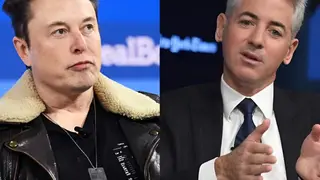
Elon Musk's vision for SpaceX to achieve petawatt-level computing capacity by 2027 could demand up to a trillion dollars in borrowed capital, according to hedge fund manager Bill Ackman. This projection comes amid growing concerns about the financial sustainability of massive AI infrastructure projects, especially after Musk's public comments on restricted access to debt markets for non-revenue-generating AI ventures. The plan includes deploying 1.2 million NVIDIA Blackwell GPUs by 2026 and expanding total compute capacity to 20 GW by 2027.
Elon Musk’s vision for SpaceX to achieve 20 gigawatts (GW) of compute capacity by 2027—driven by a planned deployment of 1.2 million NVIDIA Blackwell GPUs at its Colossus 2 data center and an additional 13 GW of infrastructure—has drawn sharp scrutiny from hedge fund manager Bill Ackman, who estimates that meeting this target could require up to $1 trillion in borrowed capital. This projection comes amid Musk’s public assertion that debt markets have effectively closed off funding for non-revenue-generating AI ventures, a claim that reportedly triggered immediate financial reactions, including renegotiated contracts and reduced lending offers from banks. Ackman’s estimate implies a cost of $50 billion per GW, though internal projections suggest the actual capital expenditure for the 2027 buildout may be closer to $390 billion—roughly $30 billion per GW—indicating a potentially lower debt burden than his figure suggests. SpaceX’s ambition extends beyond terrestrial data centers: Musk has proposed launching AI-powered satellites into deep space using lunar-based mass drivers, aiming for petawatt/year compute capacity, which would exceed Earth’s current total energy use by 50 times. This futuristic plan hinges on manufacturing hardware on the Moon and leveraging reduced gravity to launch systems into orbit. Key players include SpaceX, NVIDIA (as a critical GPU supplier), and financial institutions that may now be hesitant to lend to AI infrastructure projects without proven reve
The story reflects growing unease about the financial viability of massive AI infrastructure projects, particularly those led by high-profile figures like Elon Musk who blend space exploration with compute ambitions. If SpaceX proceeds with its $390 billion+ capital plan—or even a fraction of it—this could strain global credit markets, especially if other firms follow suit in seeking debt for non-revenue-generating AI ventures. The broader tech sector may see ripple effects, with investors reassessing the risk profile of neocloud providers and hyperscalers alike. A comparable precedent is the dot-com bubble, where excessive optimism about internet infrastructure led to unsustainable valuations and market corrections. While Musk’s vision could revolutionize compute by moving it beyond Earth, the economic feasibility remains uncertain. What may unfold next is a period of cautious financing, with lenders demanding stronger revenue models or government backing for such projects. The outcom