1987 Arcade Shooter Exzisus Arrives on Nintendo Switch Platforms Tomorrow
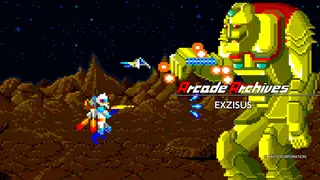
TAITO’s 1987 arcade shooter Exzisus is set to launch digitally on both the Nintendo Switch and Switch 2 on November 5, 2026 as part of Hamster’s Arcade Archives series. Players control Cosmo Fighter Robin in a space-based action game, using blasters and missiles while upgrading through collected items and summoning support robots. The game features modern enhancements like save points, rewind functionality, and online leaderboards.
On November 5, 2026, TAITO’s 1987 arcade shooter Exzisus will launch digitally on both the Nintendo Switch and the upcoming Nintendo Switch 2 as part of Hamster Corporation’s Arcade Archives series. The game, which features player control of Cosmo Fighter Robin in a space-based action format, allows for upgrades via collected items, transformation into Turbo Jet mode, and summoning of animal support robots. It includes modern enhancements such as save points, rewind functionality, online leaderboards, and VRR (Variable Refresh Rate) support to improve authenticity. The release is available at $9.99 on the Switch 2 and $7.99 on the original Switch, with multiple modes including ORIGINAL MODE, HI SCORE MODE, CARAVAN MODE, and a new TIME ATTACK MODE exclusive to the “Arcade Archives 2” series. This marks a continuation of Hamster’s effort to preserve and modernize classic arcade titles for contemporary audiences.
The release is part of an ongoing trend in retro gaming preservation, with Hamster Corporation leading the charge through its Arcade Archives initiative. The company has previously released titles like Prehistoric Isle and Elevator Action under the same banner, emphasizing faithful reproduction while adding user-friendly features. Nintendo’s support of this series—now extending to both current and next-gen hardware—signals a strategic push to maintain backward compatibility and attract nostalgia-driven consumers. TAITO, as the original developer, benefits from renewed
The release of Exzisus could strengthen consumer confidence in Nintendo’s commitment to preserving gaming history, potentially encouraging more retro titles to be reissued across platforms. Gamers nostalgic for 1980s arcade experiences may find renewed engagement through accessible, modernized versions that retain original mechanics while reducing frustration with outdated design. This may also influence other companies to invest in digital archiving, especially as physical arcade cabinets age and become harder to maintain. Comparable to the success of Capcom’s Classics Collection or Sega’s Forever series, Arcade Archives could set a benchmark for how legacy games are reintroduced to new audiences. However, the long-term sustainability of such efforts depends on ongoing support, server maintenance, and licensing clarity—issues not fully addressed in the current announcement. If online leaderboards or multiplayer features degrade over time, user interest may wane. Additionally, this mo