Schreier Stands by TES 6 Delay Claim Amid Fan Outcry
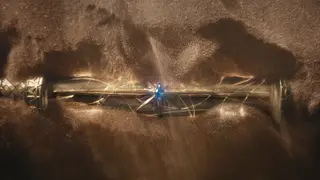
Jason Schreier has reaffirmed his report that The Elder Scrolls 6, titled Sentinel, remains over two years from release despite a new trailer sparking hope among fans. The announcement of the game’s setting in Hammerfell and the release of a short CGI teaser did little to quell speculation about an imminent launch. Schreier emphasized that the early stage of development is evident, even as community frustration mounts over the prolonged wait.
Jason Schreier, a senior reporter at Bloomberg, reaffirmed his claim that The Elder Scrolls VI, titled Sentinel, remains over two years from release despite a new trailer and CGI teaser unveiled in November 2026. The announcement confirmed the game’s setting in Hammerfell, a region long speculated by fans, and marked the first substantial visual update since the game’s initial reveal eight years prior. This brief but impactful reveal sparked renewed hope among fans that a 2027 launch might be imminent—only for Schreier to counter with a report stating development is still in an early stage. His assertion triggered significant backlash, particularly on Reddit’s r/teslore and other fan forums, where many expressed frustration over the prolonged wait. Schreier responded by posting on the subreddit, defending his reporting as factual and consistent with past patterns of Bethesda Game Studios’ development timelines.
The context for this reaction lies in a history of delayed releases and fan misinterpretation at Bethesda. Schreier referenced similar reactions to his reports on Fallout 76 and Starfield, both of which were met with skepticism despite being accurate. He emphasized that such delays are typical for major Bethesda titles, citing the company’s track record of lengthy development cycles. The developer, Bethesda Game Studios, and publisher, Bethesda Softworks, have not publicly contradicted Schreier’s timeline, though they have not confirmed a release window either. What r
The story reflects broader tensions in gaming culture between fan expectations and developer timelines, particularly for long-anticipated franchises. With The Elder Scrolls VI representing one of the most iconic RPG series, its prolonged silence has fueled both anticipation and anxiety, making any update a flashpoint. Schreier’s reporting underscores how media scrutiny can amplify fan frustration when timelines are unclear—especially after years of minimal communication. This dynamic mirrors earlier cases like the protracted development of No Man’s Sky (2016), where hype and disappointment collided, or the backlash against Microsoft’s delayed Halo Infinite (2020). The current situation may influence how publishers manage community expectations in the future, possibly leading to more transparent roadmaps or phased reveals. What could change next is whether Bethesda adopts a more consistent communication strategy—especially as cross-platform availability remains uncertain due to Xbox’s s