Intel's Upcoming Nova Lake-S CPUs Hit 5.1 GHz Ceiling When Overheating
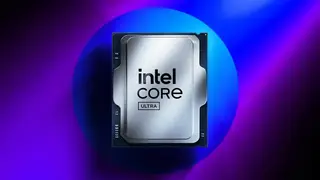
Intel's upcoming Core Ultra 4000 "Nova Lake-S" desktop processors are reportedly capped at 5.1 GHz when temperatures exceed 90°C, acting as a thermal safety threshold before full throttling kicks in at 100°C. This limit, separate from standard TjMax throttling, may impact performance under heavy loads, especially given the high power draw of top-tier models like the 28-core 4970K BFC. The chips are expected to launch in Q1 2027, with cooling solutions playing a critical role in maintaining peak performance.
Intel’s upcoming Core Ultra 4000 “Nova Lake-S” desktop processors are reported to impose a hard ceiling of 5.1 GHz on maximum core frequency when temperatures exceed 90°C, according to leaker Jaykihn via X and reported by Videocardz. This thermal safety threshold operates independently of the standard TjMax throttling that activates at 100°C, meaning performance may drop significantly before full throttling begins. The limit applies across the entire Nova Lake-S lineup, though it only affects chips that reach or surpass 90°C under load—particularly high-power models like the 28-core Core Ultra 9 4970K BFC, which is expected to draw up to 296 W at PL2 despite a 125 W TDP. This behavior suggests Intel has implemented an intermediate performance cap as a protective measure, possibly to prevent thermal runaway or long-term reliability issues. The chips are slated for release in Q1 2027, with no official confirmation yet from Intel. Prior leaks have already revealed details such as the LGA1954 socket, bLLC cache configurations, and high power consumption figures, indicating a trend toward extreme performance at the cost of thermal management.
The background includes Intel’s recent shift in naming schemes and product segmentation, with the Core Ultra 4000 series expected to extend into mobile variants like “Nova Lake-HX.” The 100°C TjMax is notably lower than Arrow Lake’s 105°C (which can be raised to 115°C on certain SKUs), signaling a tighter thermal envelope. This may reflect d
This thermal ceiling could significantly affect high-performance desktop users who rely on sustained boost clocks for gaming and content creation. Enthusiasts investing in premium air or liquid cooling may see diminished returns if their systems cannot consistently keep the CPU below 90°C under load, especially with power-hungry models like the 4970K BFC. The impact may be most pronounced in overclocking communities where pushing beyond stock limits is common, as this cap could limit achievable performance even before reaching TjMax. Comparable to Intel’s past thermal throttling issues with earlier generations—such as the Core i9-12900K’s infamous “thermal throttling wall”—this new behavior may prompt a renewed focus on cooling efficiency and system design. It also raises questions about whether competitors like AMD will adopt similar intermediate limits, potentially shifting market dynamics in favor of systems with superior thermal management. The broader tech ecosystem—cooling manufa