Navigating the Challenging Water Temple in the Ocarina of Time Remake
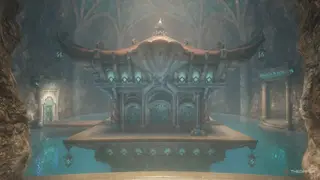
The Water Temple in the Ocarina of Time remake remains a test of patience and precision, with dynamic water levels and aquatic puzzles. Players must manage rising and falling water through timed switches and use tools like the Iron Boots and Hookshot to progress. The updated design reduces frustration while preserving the dungeon’s legendary difficulty.
The Water Temple in the 2026 remake of *The Legend of Zelda: Ocarina of Time* remains a pivotal and notoriously difficult dungeon, located beneath Lake Hylia in Hyrule’s future timeline. Players must navigate shifting water levels controlled by timed switches, using tools like the Iron Boots for submersion and the Hookshot to traverse gaps. Key mechanics include lowering water via Zelda’s Lullaby played on the ocarina at a Triforce symbol, activating stone switches to raise platforms, and defeating aquatic enemies such as Spike balls, Shell Blades, and Stingers. The dungeon features multiple Small Keys, a Compass, a Map, and a Gold Skulltula hidden beneath the central tower after raising water levels to the second floor. The walkthrough, published by Collin MacGregor on November 5, 2026, emphasizes that while the remake retains the original’s legendary difficulty, updated design choices reduce frustration—particularly through clearer visual cues and more forgiving mechanics. This iteration preserves the core challenge while making progression more accessible to modern players.
The Water Temple’s reputation stems from its initial release in 1998, where it became infamous for its complex puzzles and punishing trial-and-error gameplay. The remake builds on this legacy by streamlining navigation without eliminating the sense of accomplishment. MacGregor, a veteran game designer and guides writer at TheGamer, brings both technical expertise and player empathy to his walkthrough,
The updated Water Temple may influence how difficult classic games are reinterpreted for new audiences, potentially shifting expectations around what constitutes a "true" challenge in remakes. By reducing frustration while preserving core difficulty, the 2026 version could set a precedent for balancing nostalgia with player experience—especially relevant as older titles like *Super Mario 64* and *The Legend of Zelda: Majora’s Mask* continue to inspire speedrunning communities. This approach may encourage developers to prioritize clarity over obscurity, possibly reshaping how game design is evaluated in both mainstream and niche circles. Comparable to the 2017 *Super Metroid* remake, which similarly modernized a notoriously hard classic, this update could spark renewed interest in retro games among younger players. However, it may also provoke debate within speedrunning circles about authenticity—whether streamlined mechanics dilute the skill required. The long-term impact on game prese