Huawei MatePad Air (2026) Delivers Premium Display and Productivity Features
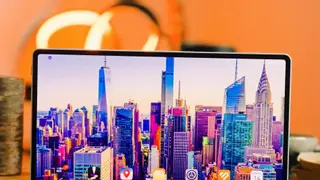
The Huawei MatePad Air (2026) stands out with its 12-inch matte OLED display, offering superior readability and contrast, especially under bright light. Paired with a stylus and keyboard case, it excels in academic and creative tasks, though it lacks desktop mode and Google Play Store access. Performance is solid for everyday use, but graphics capabilities fall behind competitors.
The Huawei MatePad Air (2026), released on September 2, 2026, debuted with a 12-inch matte OLED display featuring a 3:2 aspect ratio, 2800 x 1840 resolution, and a 144 Hz refresh rate. Priced from £699.99 in silver, pink, or light blue, it includes a stylus and supports fast charging via USB-C with a 10,100 mAh battery. The device runs Huawei’s HarmonyOS, lacks native Google Play Store access, and is not available with 4G or GPS. It uses the HiSilicon Kirin T93C processor and Maleoon 935B graphics chip, with 12 GB RAM and 256 GB UFS 4.0 storage. The tablet’s standout feature is its PaperMatte OLED surface, which enhances readability under bright light—particularly advantageous for students and creatives. It also boasts stereo speakers with six drivers, IP42 dust and splash resistance, and supports Wi-Fi 7 (802.11be), though not 6 GHz band access. Despite strong build quality and performance in everyday tasks, it lacks desktop mode, biometric security, and long-term software updates. The absence of Google services, especially the Play Store, limits its appeal in markets dependent on Android’s ecosystem.
Huawei’s decision to exclude Google services reflects ongoing tensions with U.S. sanctions that have restricted access to Google Mobile Services since 2019. This strategic pivot toward HarmonyOS and proprietary ecosystems continues a pattern seen in earlier devices like the MatePad Pro series. While the company aims to strengthen its domestic market and expand in regions less
The MatePad Air (2026) underscores the growing fragmentation of the global tablet market, where geopolitical constraints are reshaping consumer choices. Users in regions with limited access to Google services—such as parts of Asia, Africa, and Latin America—may find HarmonyOS a viable alternative, especially given its strong display and audio performance. However, in Western markets, the absence of the Play Store could deter mainstream adoption, particularly among students and professionals reliant on cloud-based workflows. This mirrors earlier cases like the Huawei P30 Pro’s launch in 2019, where ecosystem limitations hampered international success despite hardware excellence. The device may influence how consumers weigh hardware quality against software continuity. If Huawei fails to deliver consistent updates or expand app availability, it could reinforce a perception of long-term obsolescence. Conversely, if HarmonyOS gains traction through partnerships or localized services, it co