Tracing the Legacy: The Most Powerful Lineage of Yamoshi in Dragon Ball
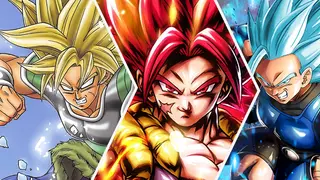
Yamoshi, the first Legendary Super Saiyan and a founding figure of peace among Ancient Saiyans, left behind a powerful bloodline that continues to shape the Dragon Ball universe. His descendants include notable figures like Paragus and Broly, whose strength and fates are tied to his heroic sacrifice. This ranking explores how Yamoshi's ideals and power echo through generations of Saiyan warriors.
Yamoshi, the first Legendary Super Saiyan and Super Saiyan God, lived during the Ancient Saiyan era on Planet Sadala before it became Planet Vegeta. Though he sacrificed himself to curb the rise of evil among his people, his bloodline endured through descendants such as Paragus, Broly, Shallot, Giblet, and Shallet. Paragus, a high-ranking soldier under King Vegeta III with a Power Level of 4,200—surpassing Raditz and Nappa—was exiled to Vampa, preventing him from joining the Frieza Force during the Saiyan Saga. Shallot, a direct descendant in Dragon Ball Legends, is an Ancient Saiyan who, despite inherent weakness compared to modern Saiyans, achieves Super Saiyan Blue, scaling to Golden Frieza and Wrathful Broly in power. His twin brother Giblet, more naturally gifted, reaches a corrupted Super Saiyan God form enhanced by Dark Ki: Unleashed, surpassing even Super Saiyan Blue Shallot and rivaling Super Saiyan Blue Kaioken x20 Goku. The fusion of Shallot and Giblet into Shallet results in a being capable of defeating Fused Zamasu—aided by Goku Black—though still slightly below Kefla and Ultra Instinct Sign Goku.
The narrative hinges on Yamoshi’s moral legacy: peace over conquest, sacrifice over tyranny. While Paragus’ potential was stifled by exile, Shallot and Giblet represent a new generation striving to honor that ideal through strength. The story is rooted in the multiverse chaos of Dragon Ball Legends, where timelines are rewritten and ancient lore recontextualized. The
The story reflects broader cultural fascination with ancestral legacies in superhero narratives, where lineage shapes destiny—akin to how Marvel’s Black Panther or DC’s Superman explore heritage and responsibility. By centering Yamoshi as a moral progenitor, the narrative elevates Saiyan lore beyond mere combat, inviting fans to consider ethics in power. This could influence future media by encouraging deeper exploration of origin myths in franchise expansions, especially in mobile games like Dragon Ball Legends that serve as narrative incubators. The success of such content may pressure other franchises to invest more in prequel storytelling and character lineage depth. If Shallet’s victory over Fused Zamasu signals a shift toward morally complex power structures, it may inspire reevaluations of “chosen one” tropes in favor of collective or inherited virtue. What’s next could be a full-scale crossover between Legends and the main series, potentially redefining how legacy characters li