Iluvatar CoreX's Tiangai 300 GPU Claims Edge Over NVIDIA H200 in Internal Tests, Shows Minimal Advantage in Independent Benchmarks
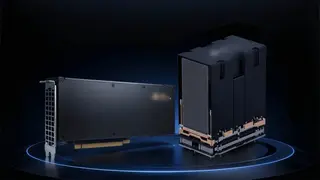
Chinese semiconductor firm Iluvatar CoreX asserts its Tiangai 300 GPU outperforms NVIDIA's H200 in internal AI workloads, particularly in text-to-image and text-to-video generation using frontier models. Independent testing by Shanghai INESA confirms only a 5% performance edge under standard deployment conditions. Despite this narrow lead, the chip shows stronger results in specific tasks like MoE throughput and latency reduction, highlighting China's growing push for domestic AI hardware alternatives.
In October 2026, Chinese semiconductor firm Iluvatar CoreX demonstrated its Tiangai 300 GPU claiming superior performance over NVIDIA’s H200 in internal benchmarks focused on text-to-image and text-to-video generation using frontier models like GLM-5.3. During the live demo, the Tiangai 300 achieved a 0.101 images per second rate with full task completion, outperforming the H200’s 0.086 images per second and 87.5% completion rate—though it took 0.64 seconds longer to finish. Independent validation from Shanghai INESA confirmed only a 5% throughput advantage under standard deployment conditions. Additional claims include a 15% edge in mixture-of-experts (MoE) throughput and up to 30% lower first-token latency for long-text processing, with the Tiangai 300 also showing 1.33 times the effective training throughput of the H100 when fine-tuning Alibaba’s Qwen3-32B model. Despite these claims, the chip remains a minor player in China’s GPU market, holding just 0.3% share in 2024. The broader context includes U.S. export controls limiting access to advanced AI chips like NVIDIA’s B300, prompting domestic alternatives and state-backed support for firms such as Iluvatar CoreX, Biren, MetaX, Enflame, and Moore Threads. However, Chinese tech giants like ByteDance, Alibaba, and Tencent still favor NVIDIA’s RTX PRO 5500 due to the entrenched CUDA ecosystem, and evidence suggests smuggled H200 units remain in use within state entities like China Telecom. Iluvatar CoreX’s ambitions are unde
The Tiangai 300’s performance claims, while modestly validated, reflect a broader geopolitical shift toward domestic semiconductor sovereignty in China, driven by U.S. export restrictions and national security concerns. If such chips gain traction despite limited independent verification, they could reshape AI infrastructure development across Asia, potentially reducing reliance on Western tech stacks—though CUDA's dominance remains a formidable barrier. The story echoes the early days of AMD’s rise against Intel in the 2000s: incremental gains in specific workloads, supported by government backing and strategic partnerships, gradually eroding market leader momentum. However, unlike that era, today’s AI hardware depends heavily on software ecosystems, making pure hardware performance insufficient for widespread adoption. The real impact may not be immediate but could influence long-term investment in open frameworks like ROCm or future Chinese alternatives to CUDA. What remains uncerta