AI Coding Tool Blocks Game Development Over IP Concerns, Spurring Developer Backlash
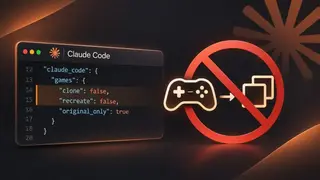
Anthropic has updated its Claude Code AI to block recreations of existing video games, even under new names, to avoid intellectual property violations. However, developers report that the restriction is mistakenly interfering with original projects, including custom board-game simulations using unique code and client-supplied assets. The company acknowledges the issue and encourages users to report false positives while refining the policy.
In late October 2026, Anthropic rolled out a new configuration—tengu_heron_brook—to its Claude Code AI assistant, instructing it to refrain from assisting in the recreation of any existing video games, even under different names or as original projects. This update was introduced around October 27 and became evident when developer Chasm identified the change via a server-delivered prompt adjustment in Opus 5.5. The directive explicitly states: “Do not build a recreation of a specific existing game, even if it is renamed or called original.” While Anthropic maintains that this restriction does not ban all AI-assisted game development—only unauthorized recreations—it has already triggered backlash from independent developers. Conflict Simulations LLC reported on October 30 that Claude Code began refusing to assist with custom digital board-wargame modules built using original code and client-supplied assets, despite the projects being non-commercial, non-licensed, and intended solely for paying customers of physical games. The developer noted the refusals coincided only after they asked whether the new policy applied. Tom’s Hardware also reported similar issues involving reverse-engineering workflows, though a direct link to the game-specific rule remains unconfirmed. Anthropic’s Addy Osmani acknowledged the unintended consequences and encouraged users to report false positives while promising ongoing refinement of the policy.
The situation arises amid growing concerns over AI
The restriction could significantly affect independent developers and modders who depend on AI tools for prototyping, optimization, and workflow automation. These groups may face increased friction in developing non-commercial or niche projects, potentially slowing innovation in the PC gaming ecosystem. The broader impact may extend to open-source communities and preservation efforts, where reverse-engineering is often necessary but legally ambiguous. A comparable precedent is the controversy surrounding GitHub Copilot’s initial training data, which sparked legal challenges over copyright infringement—though those cases were focused on code reuse rather than game recreation. In both instances, companies have attempted to mitigate risk by restricting outputs, but with unintended consequences for legitimate use. The current situation may prompt developers to seek alternative tools or develop in-house AI models, potentially fragmenting the ecosystem. What’s next could be a push toward mor