Intel Unveils New Low-Power Processors Targeting Embedded and Enterprise Markets
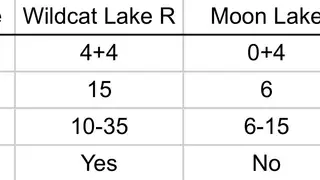
Intel is developing two new processor designs based on its 18A manufacturing node: "Moon Lake," a compact, ultra-low-power SoC with up to four Darkmont efficiency cores and a 6W TDP for use in devices like NAS systems, and a refreshed "Wildcat Lake" with increased P-Core count and vPro support for enterprise adoption. The Moon Lake chip, lacking traditional performance cores, is positioned as a successor to Intel's N-Series processors, while the refresh enhances existing Wildcat Lake models with better multi-core performance and remote management capabilities. Both designs share the BGA1516 package and are expected to launch in early 2027.
Intel has unveiled two new processor designs—“Moon Lake” and “Wildcat Lake Refresh”—both built on its advanced 18A manufacturing node, with distinct targets in embedded and enterprise computing. Moon Lake, codenamed MNL, is a compact System-on-Chip (SoC) featuring up to four Darkmont efficiency cores and no traditional performance cores (P-Cores), designed for ultra-low-power applications such as NAS systems. It operates at a 6W TDP, similar to smartphone SoCs, and uses the BGA1516 package—shared with Wildcat Lake. The refresh of Wildcat Lake, meanwhile, increases P-Core count from 2 to 4 while retaining the Cougar Cove microarchitecture, 4 Darkmont efficiency cores, and up to 2 Xe3 GPU cores. Crucially, it adds vPro support, enabling remote management for enterprise users. Both are expected to launch in early 2027—Wildcat Lake Refresh in Q2, Moon Lake in Q4—with Intel Foundry handling production. The 18A-P variant of the 18A node will be used for the refresh, indicating a performance-optimized refinement.
This development follows Intel’s strategic pivot toward specialized low-power processors, continuing from earlier N-Series chips like Alder Lake-N. The absence of P-Cores in Moon Lake signals a shift toward efficiency-centric design, likely targeting cost-sensitive embedded markets where power and thermal constraints are paramount. Meanwhile, the vPro addition to Wildcat Lake Refresh reflects Intel’s push into enterprise adoption with lower-cost, manageable platforms. In
These processors could reshape the landscape for low-power computing in data centers and edge devices, particularly benefiting small businesses and IoT deployments that prioritize energy efficiency and remote manageability. The inclusion of vPro in a budget-friendly platform may disrupt traditional enterprise PC procurement models by enabling secure, scalable deployment without high-end hardware. A comparable precedent is Intel’s earlier success with the N-Series, which dominated low-power desktops and embedded systems for years. However, unlike those chips, Moon Lake’s complete lack of P-Cores may limit its appeal in multitasking or latency-sensitive applications. The broader impact could extend to competitors like AMD and Qualcomm, who are also investing heavily in low-power SoCs. If Intel successfully balances power efficiency with enterprise functionality, it may strengthen its position in the embedded market. What to watch for next is whether these chips will support modern securi