Xbox Consoles Now Support Advanced FSR 4.1.2 Upscaling for Smoother Gaming
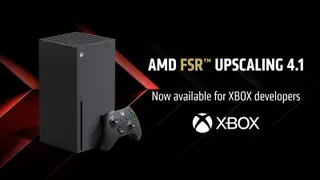
Microsoft's Game Development Kit now includes AMD's FSR 4.1.2 upscaling technology for Xbox Series X and S, offering developers two INT8-based models—full-scale and lightweight—for optimized performance. The update also extends support to ROG Xbox Ally handhelds with Ryzen AI Z2 processors via the AMD FSR SDK 2.4. This marks a significant step in enhancing visual fidelity across Xbox hardware without requiring dedicated upscaling hardware.
On November 5th, 2026, Microsoft’s Game Development Kit (GDK) integrated AMD’s FSR 4.1.2 upscaling technology for Xbox Series X and S consoles, marking a major shift in console graphics processing. The update introduces two INT8-based models—full-scale and lightweight—enabling developers to optimize performance based on game-specific demands. This implementation is particularly significant because Xbox hardware, powered by RDNA 3.5 APUs and RDNA 2 GPU IP, lacks native FP8 support; thus, FSR 4.1.2 must be adapted to INT8 data types for compatibility. The same technology extends to ROG Xbox Ally handhelds with Ryzen AI Z2 Extreme and Z2 A processors via the AMD FSR SDK 2.4, allowing Windows-based developers to apply upscaling through standard integration paths. This move aligns with AMD’s broader rollout of FSR 4.1.x, which initially arrived on RDNA 4 GPUs with native FP8 support but required conversion for earlier architectures.
The development follows prior announcements, including the May 2026 launch of FSR 4.1 on Radeon RX 7000/6000 series GPUs, and reflects a strategic alignment between AMD and Microsoft to enhance visual fidelity across platforms without dedicated hardware. AMD benefits from broader ecosystem adoption, while Microsoft gains improved performance for its consoles and handhelds, potentially boosting user satisfaction and developer engagement. The inclusion of FSR on handheld devices like the ROG Xbox Ally X20 suggests a focus on mobile gaming performance, w
The integration of FSR 4.1.2 into Xbox consoles could significantly improve gaming accessibility and performance on mid-tier hardware, particularly benefiting users with older or less powerful displays. By enabling higher frame rates and visual quality without raw hardware upgrades, this update may extend the lifespan of existing consoles and reduce barriers to entry for casual gamers. For developers, the choice between full-scale and lightweight models introduces flexibility but also complexity in optimization—potentially increasing development overhead. The broader impact may ripple into the handheld gaming market, where devices like the ROG Xbox Ally could gain a competitive edge through better upscaling efficiency. A comparable precedent is NVIDIA’s DLSS rollout on PC and console platforms, which reshaped expectations for real-time rendering. However, unlike DLSS, FSR is open-source, potentially fostering wider adoption across ecosystems. What remains uncertain is whether this will