HP OmniBook Ultra 16 Spark Offers High Performance with Critical Configuration Choices
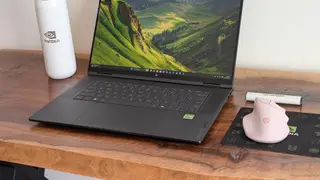
The HP OmniBook Ultra 16 Spark leverages Nvidia's ARM-based Spark platform for strong performance-per-watt in a slim chassis, but its $3200 entry-level model comes with only 32 GB of non-upgradeable RAM. While ideal for creators and power users leveraging the unified memory architecture, early software issues and limited gaming compatibility hinder the experience.
The HP OmniBook Ultra 16 Spark, released in October 2026, marks a pivotal moment in the evolution of mobile computing by leveraging Nvidia’s ARM-based Spark platform, which integrates CPU, GPU, and unified memory into a single silicon package. The base model starts at $3,200 with 32 GB of soldered LPDDR5x RAM—non-upgradeable—and is powered by a 20-core RTX Spark N1X processor and a 6,144-core Blackwell GPU. Despite its compact 140 W USB-C power adapter and high performance-per-watt efficiency, the system faces critical limitations: early software instability, stuttering during 4K60 video playback, and poor gaming compatibility, with titles like Forza Horizon 6 and Assassin’s Creed Resynced experiencing crashes and stutters. The device lacks a full-size SD card reader, offering only a slower MicroSD slot, and features USB-C ports on just one side, which is a notable downgrade compared to competitors like the Asus ProArt P16. While the sleek metal chassis and long battery life are praised, the $3,200 entry point for 32 GB of RAM—compared to more flexible x64 alternatives such as the HP Omen Max 16 with upgradeable 32 GB RAM and a GeForce RTX 5080—raises questions about value. The broader context includes Nvidia’s push into ARM-based laptops for creators and AI workloads, but early adopters face trade-offs between portability and functionality.
The HP OmniBook Ultra 16 Spark could signal a shift toward specialized, high-efficiency mobile platforms for content creation and AI tasks, potentially influencing future laptop design around unified memory and power efficiency. However, its high price and non-upgradeable RAM may deter mainstream users, especially when comparable x64 systems offer more flexibility at similar cost points. Early software issues and gaming incompatibility may slow adoption among developers and creatives who rely on stable, broad compatibility. This situation echoes the initial reception of Apple’s M1 MacBooks—praised for performance and battery life but criticized for ecosystem limitations and app optimization delays. Over time, driver improvements and software updates could resolve many current issues, but the long-term success of Spark-based laptops may depend on how quickly third-party developers adapt. The market may see a bifurcation: niche professional devices like this one for AI and creative workf