Comprehensive Chronological Guide to Every Legend of Zelda Game Ever Released
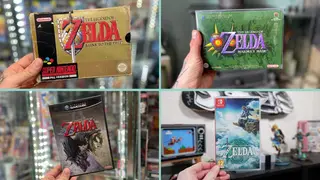
This detailed list catalogs all official Legend of Zelda titles from the original 1986 NES release to later entries across multiple platforms, including niche releases like the Game & Watch and Nelsonic Game Watch versions. It organizes the franchise's extensive history by release date, highlighting both major entries and lesser-known spin-offs. The guide serves as a definitive reference for fans exploring the full scope of Hyrule's legacy.
The Legend of Zelda franchise, which began with its 1986 NES release, has expanded across decades and platforms, reflecting Nintendo’s evolving approach to game design and portability. The series’ earliest entries—The Legend of Zelda (1986), Zelda II: The Adventure of Link (1987), and the Game & Watch version (1989)—established core mechanics like dungeon crawling and the Triforce mythos, while also experimenting with form, such as the dual-screen gameplay of the Game & Watch device. These early titles laid the foundation for later innovations, including the 1991 SNES release A Link to the Past, which introduced parallel worlds and solidified the franchise’s narrative depth. The 1993 Game Boy entry, Link’s Awakening, became a cult classic, later re-released as DX in 1998 with enhanced visuals and new content like the Color Dungeon. Meanwhile, niche platforms like the Philips CDI (1993) hosted titles such as Link: The Faces of Evil and Zelda: The Wand of Gamelon, demonstrating Nintendo’s willingness to license its IP beyond its own hardware. The Satellaview-exclusive BS Zelda games (1995–1997), including remakes with voice acting and alternate protagonists like “BS,” reveal a bold, experimental phase in the franchise’s history that remains obscure to most Western audiences.
The people involved—primarily Nintendo and its developers—have consistently sought to innovate while maintaining brand identity. The company’s decision to release games on non-Nintendo platforms during the
The article’s detailed chronology may deepen fan engagement with a historically rich but often overlooked aspect of gaming culture. By highlighting obscure titles like the Nelsonic Game Watch version or Satellaview-exclusive games, it elevates niche entries from curiosity to cultural artifacts, potentially influencing how retro gaming communities curate and preserve legacy content. This could strengthen collector markets for rare hardware and software, particularly among enthusiasts seeking completeness. Comparable to the resurgence of interest in early arcade games or obscure console titles like those on the Sega CD, this attention may inspire similar archival efforts across other franchises. The broader impact may extend to game preservation advocacy, as such lists underscore the risk of losing culturally significant but commercially minor works. Looking ahead, Nintendo could leverage this renewed curiosity by releasing curated compilations or digital archives—though whether they wil